
*this publication includes a few affiliate links*
Let’s jump right back into Jacob’s story.
[Start at part 1 here, or catch up on part 2 here]
Jacob’s parents were eager to try anything that might decrease his aggressive behaviors at his co-op preschool. Based on what we knew (that he seeks out proprioceptive input and dislikes imposed touch from peers), these are the starting accommodations we discussed:
- Structured heavy work (as a “teacher helper”):
- Digging weeds or pushing a wheelbarrow with gardening tools
- Returning tricycles or play cars by pushing them back to their parking spot
- Helping one of the dads rebuild part of the fence
- Support during rug time:
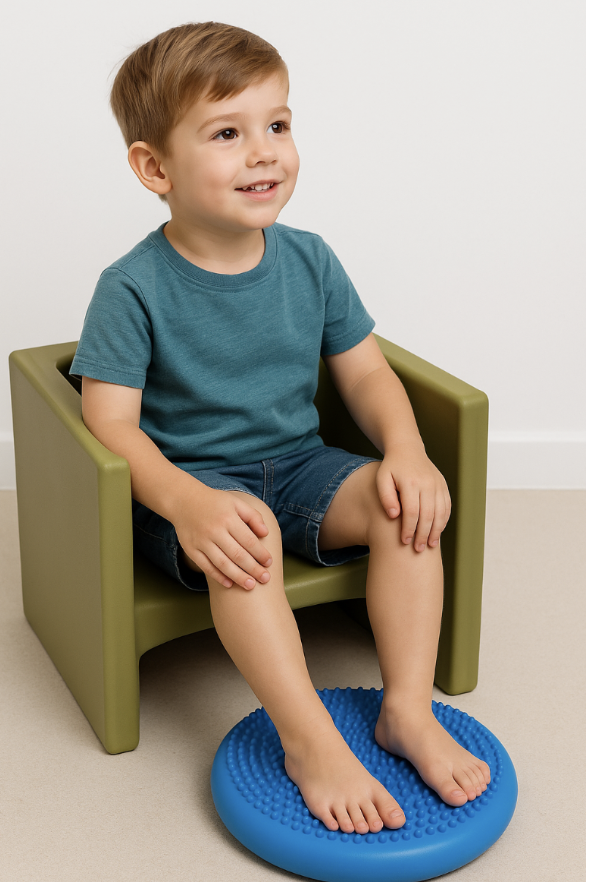
- Offer him a cube chair for posture support, with a wiggle cushion on the floor for his feet to move
*This is an AI generated photo to illustrate what this could look like:
- Offer him a cube chair for posture support, with a wiggle cushion on the floor for his feet to move
- Choice before outside play: Instead of “go play,” give him two options for structure, like:“Hey Jacob, do you want to kick the soccer ball around or do some climbing?”
- Transition jobs: Provide a simple job when it’s time to go back inside, such as:
- “Jacob, can you carry this inside and put it on my desk?”
- “Can you push the lunch cart back to the shed?”
-
“Here’s a squirt bottle—can you give each bush 3 squirts before walking in?”
- Facilitated one-on-one play: Pair him with one peer at a time for activities that include proprioception but aren’t too competitive or overstimulating, like:
- Riding the see-saw
- Working together to push/pull a heavy container
- Taking turns pushing each other in the play car