← Back to all posts

Classroom regulation and accommodations to prevent aggression

by Laura Petix
Sep 29, 2025
Connect


*this publication includes a few affiliate links*


Let’s jump right back into Jacob’s story.
[Start at part 1 here, or catch up on part 2 here]

Jacob’s parents were eager to try anything that might decrease his aggressive behaviors at his co-op preschool. Based on what we knew (that he seeks out proprioceptive input and dislikes imposed touch from peers), these are the starting accommodations we discussed:


  • Structured heavy work (as a “teacher helper”):
    • Digging weeds or pushing a wheelbarrow with gardening tools
    • Returning tricycles or play cars by pushing them back to their parking spot
    • Helping one of the dads rebuild part of the fence


  • Support during rug time:
    • Offer him a cube chair for posture support, with a wiggle cushion on the floor for his feet to move
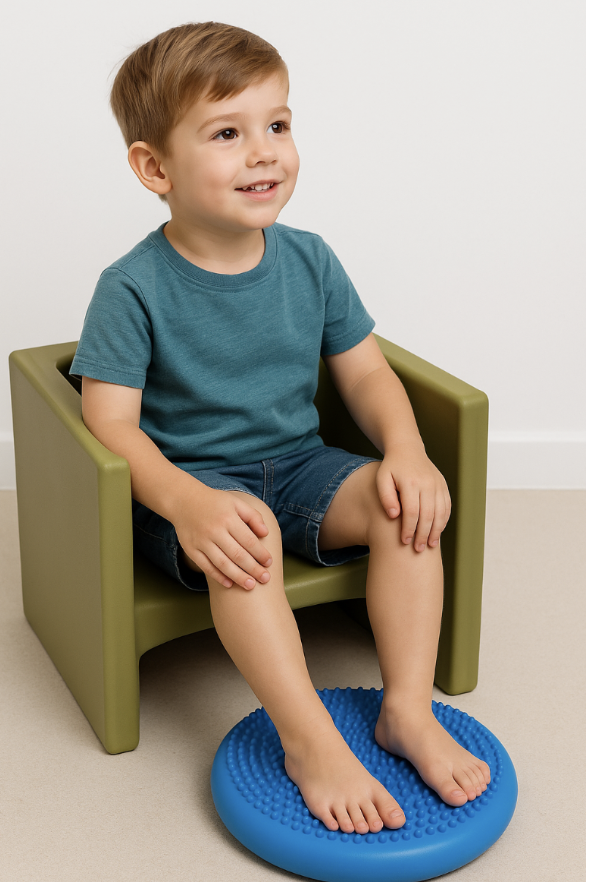
      *This is an AI generated photo to illustrate what this could look like: 

  • Choice before outside play: Instead of “go play,” give him two options for structure, like:“Hey Jacob, do you want to kick the soccer ball around or do some climbing?”
  • Transition jobs: Provide a simple job when it’s time to go back inside, such as:
    • “Jacob, can you carry this inside and put it on my desk?”
    • “Can you push the lunch cart back to the shed?”
    • “Here’s a squirt bottle—can you give each bush 3 squirts before walking in?”

  • Facilitated one-on-one play: Pair him with one peer at a time for activities that include proprioception but aren’t too competitive or overstimulating, like:
    • Riding the see-saw
    • Working together to push/pull a heavy container
    • Taking turns pushing each other in the play car

 

What about the aggression? 

Subscribe to keep reading this post

Subscribe

Already have an account? Log in

Loading...
Lena’s story part 4
    Today we’ll wrap up Lena’s story with learning about how her interoception processing differences impede her ability to self regulate, and how her parents can support her. If you want to catch up on parts 1-3, click here and scroll through each post.    So far, we’ve talked about why transitions felt so hard for Lena, and how movement played a huge role in helping her regulate… until it di...
Lena’s story part 3
    Welcome back for part 3 of Lena’s story. Catch up on part 1 [here] or part 2, [here]   Today we’ll discuss why Lena’s regulation strategies that once were a “game-changer” were now backfiring.    “She is stalling by spending time on the things that we have for regulation like her lycra swing and gymnastics bar. It’s hard to take away something that is regulating. Last time we did she had ...
Lena’s story part 2
      In last week’s email, we were introduced to Lena — a movement-seeking, hyper-silly kindergartener who hates being told what to do. Today, I want to zoom in on her resistance to instructions and transitions.  As you can imagine as a parent, this affects all parts of every single day. We are in charge of keeping these tiny humans fed, clothed, clean and attending school— and kids don’t jus...

The Sensory Code

Learn how to decode behavior using a nervous system lens and how to incorporate sensory strategies into your daily life by these real life case study examples.
Powered by Kajabi

Join Our Free Trial

Get started today before this once in a lifetime opportunity expires.