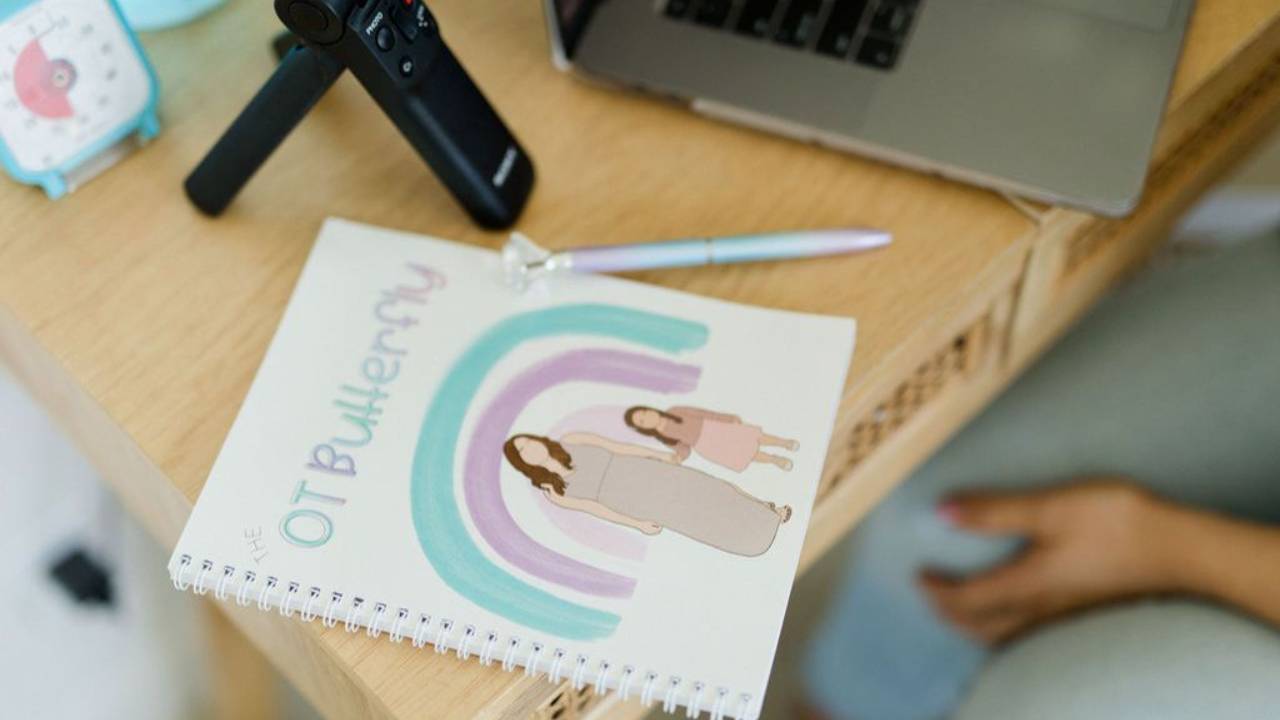
Today we’re going to talk about morning routines in part 2 of Mina’s story.
[Click here to go back and catch up on part 1]
Mina’s mornings often start with frustration, sensory overwhelm, and a pile of clothes that didn’t feel “perfect,” a scene that I am all too familiar with.
For Mina’s parents, mornings were one of the hardest parts of the day. From the moment she woke up, her nervous system seemed to be on edge — and if one thing felt off, the whole routine could spiral.
“Most mornings she wakes up… I joke she wants to burn the world down. It’s really hard.”
It wasn’t just the transitions from getting out of bed or going to school — it was every little thing in between. Mina hated the cold floor. She demanded the toilet seat be covered by toilet paper so it wasn’t too cold on her skin. She didn’t want to be told what to wear — but she also didn’t want to wear what she herself had set out the night before.
They had tried everything from allowing Mina to just go to school in her pajamas to letting her sleep in her clothes the night before. They worked to some extent, but I had some minor accommodations and changes they could try in the morning.
Clothing Battles
“She’s been dressing herself since she was like one and a half... we have not been able to put clothes on her. And I don’t care what she wears—it’s just like, if we’re trying to be speedy to get somewhere, that’s when it becomes problematic.”
If any part of the texture of the fabric, tightness, or the way each piece of clothing fits on her limbs wasn’t right, the whole morning would be thrown off.
“She likes soft clothes, many layers, really loose or tight... long pants, long sleeve shirts. She needs each layer of clothing to lay a certain way. Even the way she takes her clothes off is intentional — so they don’t get turned inside out.”
As a parent to a child with clothing sensitivities and very strong preferences for fit and style- I resonate so much with this. Like Mina’s parents, I also dreaded the morning. It was already filled with so many transitions, plus the ticking clock with places to go, which inevitably added a LOT more stress to the environment–and our kids’ nervous systems.
Mina’s parents were already doing two of my go-to strategies, which I encouraged they continue:
-
Waking up early so there is a long enough “runway” to allow for changing outfits, and a slow warm-up to getting dressed so parents didn’t feel the need to rush
-
Letting her sleep in her school clothes (but this wasn’t as helpful, because Mina still wore Pull-Ups, so she still had to change her bottom half in the morning)
I gave them three new suggestions: